Saturday, July 2, 2011

Traveling the Whole Sky with Research


Allison Druin, Associate Dean for Research, iSchool

One night recently, I was reading an online book to my girls: Elinda who Danced in the Sky, an Estonian folktale about a sky goddess. Since I was unusually awake, I was especially enjoying the words of author, Lynn Moroney: “With me you will not remain fixed in one place, but come and go.  You will not take a narrow path, but travel the whole sky."

Elinda Who Danced in the Sky which can be accessed in the International Children's Digital Library

I’m sure you won’t be surprised when I say that these words reminded me of how our iSchool faculty and students travel the whole sky with their research. Over the last few months the grant awards, books, articles, and more have not come from “one place” or a “narrow path” but seemingly the “whole sky.”  For example, Associate Dean Ann Weeks received a research award from the Institute of Museum and Library Services to lead a team to study the demographics and skills of district library supervisors, who have not been the subject of extensive research since the late 1960s. This research will explore the current roles and responsibilities of district library supervision offices in 100 largest and 100 mid-size school districts in the United States. Ann’s research team will include doctoral student, Jeff DiScala, newly appointed iSchool lecturer, Sheri Massey, and Special Assistant to the Dean, Diane Barlow
Another exciting part of the research sky has been taken by our iSchool’s Paul Jaeger who was just named co-editor (with Sandra Braman, University of Wisconsin-Milwaukee) for a Policy Book Series published by MIT Press.  The book series will cover significant information policy challenges in the context of laws, regulations, policies and decision-making principles that affect any form of information creation, processing, flows, access, and use. This interdisciplinary book series is already inviting manuscripts from authors in any field with an interest in the making, implementation, and effects of decision-making about information policy.

And another book project from the iSchool comes by way of Scott Paquette, who focuses on Knowledge Management (KM).  Scott co-wrote with K. Desouza, a colleague from U of Washington, the book Knowledge Management: An Introduction published by Neal-Schuman Publishers. This book balances the theory and practice of KM by examining fundamental and emerging concepts. They consider the issues that organizations encounter in the global marketplace, and it is one of the first books to integrate social media and networking into KM practice.
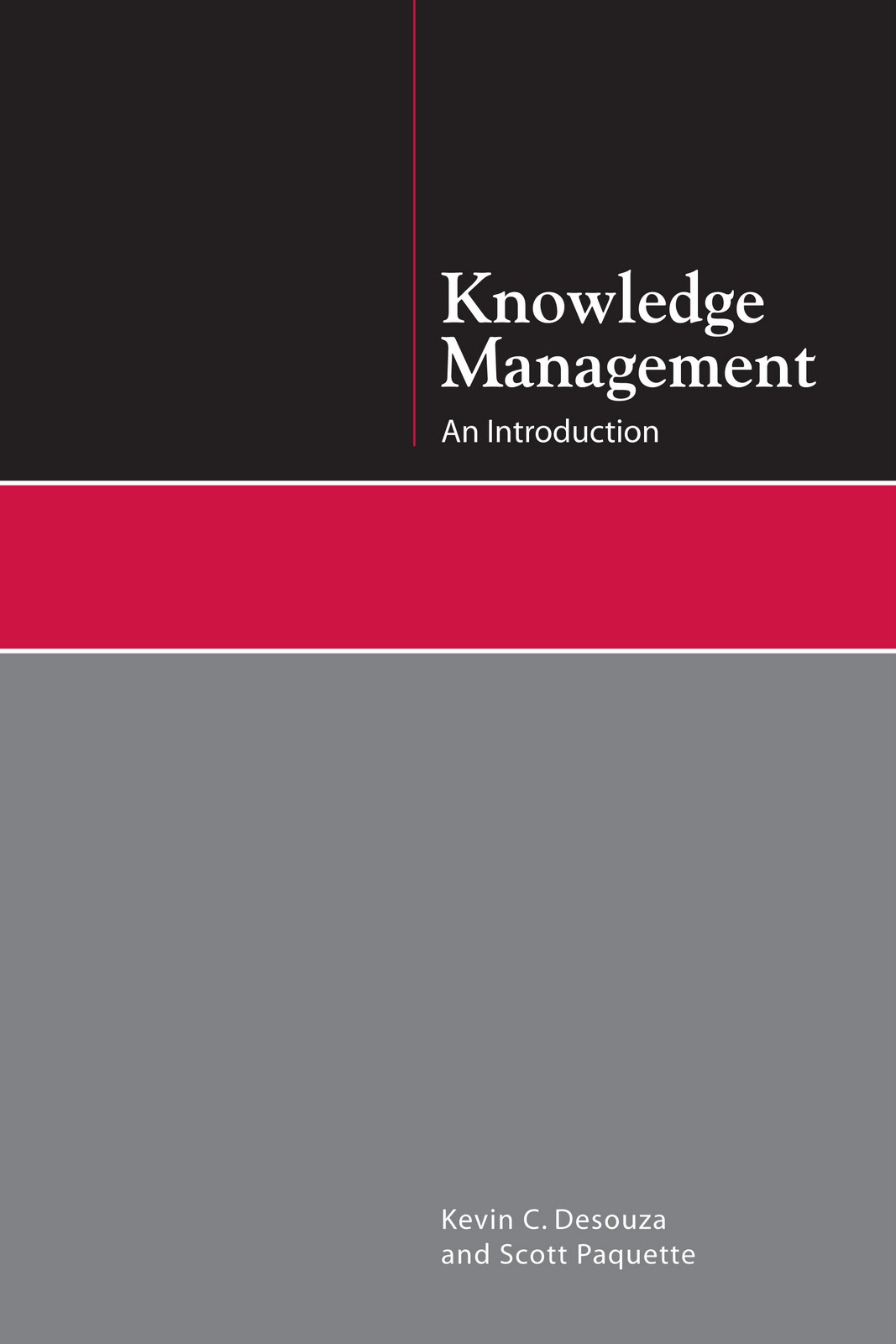
Knowledge Management: An Introduction published by Neal-Schuman Publishers

In addition, iSchool faculty member Mega Subramaniam, (along with Ann Ryu Edwards from the College of Education) received a university ADVANCE seed grant for a one-year research project: Leveraging Technology for Mathematics: Exploring Instructional Collaboration between School Librarians and Mathematics Teacher. This ADVANCE grant will serve as a pilot study for the development and deployment of a collaboration model between math teachers and school librarians that helps underrepresented, disadvantaged and underserved youths in middle schools increase engagement and achievement in math.

Mega has also been busy working on a recently awarded seed grant with Paul Jaeger: The Museum Experience of Children with Autism and Their Families: Improving Access through Web and Electronic Resources. Jointly funded by the Smithsonian Institution and the University of Maryland, Pino Monaco from the Smithsonian Center for Education and Museum Studies and Beth Ziebarth from the Smithsonian Institution Accessibility Program (SIAP) will be working with Mega and Paul on this research.  What is so exciting about this project is that it is one of the first concrete efforts to explore the integration of the web and other electronic resources as a means to promote greater inclusion of persons with disabilities in museums.

And still one more… the iSchool’s Trudi Bellardo Hahn has co-authored a very interesting summer article for the Bulletin of the American Society for Information Science & Technology. It asks the question: Has the revolution in scholarly communication lived up to its promise? In it the authors discuss Open Access channels of publishing and how they can support authors in transforming the traditional system of scholarly communication. 

So when I think about traveling that research blue sky, I am certain the paths we’re taking at Maryland’s iSchool can eventually lead to a whole sky of possibilities.

Tuesday, May 31, 2011

Research Tweets

Allison Druin, Associate Dean for Research, iSchool

Yes, on May 25, 2011, #HCIL was “trending” in the Washington DC area on Twitter (see screen grab by Jen Golbeck below).  What does this mean?  Amazingly for the first time in the Human-Computer Interaction Lab’s (HCIL) 28 years, so many of us were tweeting about the Lab’s Symposium on Twitter, we were among the top ten items people were talking about online in the Washington-area. Why care? Because more people than ever can now be a part of a research event through social media.
#HCIL Trending on Twitter in the Washington DC area, May 25, 2011

The Human-Computer Interaction Lab (HCIL)  is the oldest HCI lab in the country, possibly the world.  The lab is incredibly interdisciplinary with faculty, staff, and students coming from 9 colleges and 2 institutes at the University of Maryland.  The lab is jointly administered by the iSchool, Computer Science Department, and the Institute for Advanced Computer Studies.  Until a few days ago, I had the honor of being the lab’s Director for 5 years (I’m happy to say iSchool Faculty member, Jen Golbeck has taken over as the HCIL’s 4th director).

Each year at the end of the spring, the lab shares its work through an annual Symposium .  This year we presented talks, demos, workshops, and tutorials on social network technologies, electronic health record informatics, interaction design and children, information visualization, consumer health informatics, and more.  People presented the technologies they built, or discussed the empirical work they’d done and the lessons they’d learned, or talked about the design methods they used to make the new technologies. (See picture of demo session) This year at the Symposium we had over 300 HCI-interested professionals flying in from the UK, China, Indiana, or taking the metro from Washington DC and more. While this was one of the largest Symposiums we’ve ever hosted at the University, we also had the largest virtual presence of participants with many who followed the Symposium’s happenings and discussions through tweets.
Demonstrations during the HCIL Annual Symposium

One our favorite tweets of the two days was from someone outside of the lab, Brian Danielak (otherwise known as @Capbri) a second-year Ph.D. student in Science Education in the College of Education at the University of Maryland.  He said in his 140 characters: "The #hcil has an astoundingly positive research culture. Why can't more academic research groups be like this?"  This tweet prompted Erika Shehan Poole (@verbicidal) an assistant professor in the College of Information Sciences and Technology at Penn State University to ask, “What are some of the #hcil best practices for fostering positivity in research culture? help other groups learn!” What was so wonderful about this exchange is that Erica is someone entirely outside of our University and did not even attend the symposium, but was able to be a part of the discussion!

Well, Ben Bederson (@bederson), one of the former Directors of the HCIL did respond with 6 more tweets offering his suggestions for best practices:

“Best practices for #HCIL: Start by reading @benbendc '93 article - http://bit.ly/lFzV0e

“Second: *always* treat colleagues with respect. Their successes are your successes. #HCIL”

“Third: critique with grace. Be honest, but no one should *ever* leave a meeting crying. #HCIL

“Fourth: Focus your work on what you love. Life is too short to do what you *should* do. #HCIL

“Fifth: Only hire people you want to have lunch with every day. #HCIL”

“Sixth: Marry your colleagues :) Our Fourth CHIple is joining #HCIL next year.”

The only tweet that was questioned was the number of married couples in the lab ;) It turns out we will have 5 married couples as of January (Ben Bederson and I are one of those couples).  If you want to see the some of the other backchannel tweeting, you can do so by searching for “#HCIL” on Twitter.  There you’ll find everything from pointers to articles that reporters wrote about our talks: “@lintool: This Is What a Sabbatical at Twitter Looks Like - @chronicle article: http://bit.ly/ivgCNJ #HCIL” to short descriptions of what was happening: “@cydparr: Morning of demos at #hcil open house. Quick GUI help scripting using screenshots, spatial ability & mobile apps, citation snippets & more” to kind words from our participants: “@ieleta: I wished for a longer EventGraph presentation by @shakmatt, so interesting! #hcil symposium” (see an EventGraph image that Derek Hansen presented below)


A Twitter EventGraph created in NodeXL that shows part of the Twitter conversation about the HCIL symposium. See http://casci.umd.edu/HCIL2011 for details


All in all, it was a wonderful way to continue the research excitement, the exchange of ideas, and enjoy the 28th Annual HCIL Symposium. See you next year (at UMD or tweeting)!

Monday, May 16, 2011

Growing Research Energy

Allison Druin, Associate Dean for Research, iSchool

The other day, I received this one line email: “I’ve had two of the best Ph.D. days ever!” It was from iSchool doctoral student, Greg Walsh.  He had just finished two days of being in the CHI2011 Doctoral Consortium.  I knew when I suggested to Greg he apply months ago, he would love meeting students and faculty from around the world thinking about Human-Computer Interaction (HCI) issues.  But what I didn’t expect was how much Greg would take away from his two days of mentorship at this Doctoral Consortium.
 
During this consortium, each doctoral student got a chance to present their in-progress dissertation research and then received feedback from a small group of culturally diverse, multi-disciplinary HCI graduate students and faculty.  They suggested which research methods and design might be of use, how to best focus and present the work, and strategies to move the research forward. As Greg explained to me a few days ago, “It was awesome being able to see how far I’d come and how my work related to other doctoral students’ research.  Maryland really prepared me in ways I wouldn’t have guessed with my research.”  When we talked further, Greg explained, “Not a lot of people are thinking about design methods for creating new technologies.  People may mention it as a part of their research in developing new technologies, but not as much about how to change design methods.  I was psyched to see how different but useful my research is.”

Greg also explained to me that lately he’d not been feeling very excited about his research, but the doctoral consortium energized him in so many ways.  The suggestions he received and the good interest in his work were extremely motivating.  He also pointed out that meeting these graduate students and faculty made him feel much more connected to CHI conference community.  It’s not every day that a graduate student can walk into an international conference of 2700 people and feel comfortable and welcomed.


The CHI2011 Conference (photo by: articpenguin)

The doctoral consortium is one of several CHI venues in which students can connect with colleagues. The CHI Student Design and Student Research Competitions afford undergraduate and graduate students the opportunity to present their work to senior researchers as well as their peers. Beth Bonsignore, one of our iSchool doctoral students earned a spot in the Student Research Competition. Reflecting on her experience she shared: “All of the students in our competition received the undivided attention of experienced researchers for almost 3 hours. I learned a great deal about how to frame a compelling story about my work and had some great discussions about how I might extend it. I also had a chance to hear about the work of other students from all over the world, and share my thoughts about the worldwide use of mobile storytelling application designed for children. Where else can you get such an opportunity to connect with future collaborators?”


Beth Bonsignore & Jes Koepfler at the CHI2011 Conference (photo by: articpenguin)

This excitement and connectedness could also be found with our doctoral students who were “student volunteers” or as they’re affectionately called, “SVs.”  This year three of our doctoral students were a part of this CHI conference program: Beth Bonsignore, Jes Koepfler, and Jason Yip.   In exchange for 20 hours of volunteer time they were given free conference registration, all meals, and reduced hotel costs.  While the conference could not exist without the 150 students that do this each year, the students get so much more out of the deal.  They get a chance to network with HCI students from around the world, meet and help HCI researchers from companies, universities, and non-profit organizations they might never otherwise get a chance to.  

For example, during one SV lunch, when Beth Bonsignore and Jes Koepfler learned about the “cooking competencies” research being done by a fellow SV at Michigan, they connected him with Jason Yip, who has been designing a “kitchen chemistry” curriculum. Jason discussed the potential for future collaboration with his new-found colleague and me. Through the SV network, a new research area in chemistry education, human-computer interaction, and social media was born. Jason was so excited, he shared, “This has been an amazing experience because of how I get a chance to interact, not only with educators in my field, but with programmers, technology designers, and other people that have a vested interest in education.” At least 5 fellow SVs told Jason, Jes, and Beth how they published papers with student colleagues they met at past conferences. 

Jes Koepfler also an iSchool SV at CHI met people who broadened her thinking in exciting ways.  Jes’s doctoral research is at the intersection of marginalized populations and social media. As a result of attending CHI she was able to attend the session on "Homeless Users" and introduce herself and her work to some of the leading thinkers in the HCI community on this topic (Jill Palzkill Woelfer of the University of Washington, and Chris Le Dantec of Georgia Tech). 

The yearly CHI conference is not the only professional conference that can offer these important experiences for our students.  But all too often when we think about what graduate students should be doing, conferences seem to fall to the bottom of the list.  The CHI conference reminded us this past week that conferences should be on the top of our list when it comes to growing our research energy.

Monday, May 2, 2011

The Seeds of Research

Allison Druin, Associate Dean for Research, iSchool

I had an hour the other day with a doctoral student in our program who reminded me why I love research.  Clay (Eliezer) Templeton told me this incredible story of how he built an Adroid App for his synagogue’s Rabbi and a few weeks later he found himself being interviewed by CNN. It was an app to help people prepare for Passover, which had little to do with his doctoral research.  And he happened to mention that while he had some programming experience, he hadn’t programmed an app until he just decided one day to help out.  The funny thing is now that Clay’s gotten a taste of mobile application programming, he’s found out he really likes it!  So I asked him, how he thought he could use this new-found-fun to add to his research?  And then we started brainstorming about perhaps building an app that collects data or one that gets users more involved in the topic he cared about.  After an hour, it was clear that the seeds of research were sown.
 
This well-spent hour reminded me that you just never know where you will find inspiration for your research.  When starting a Ph.D. program, the one thing we do know is that doctoral students can never be sure what will inspire, excite, or interest them.  When those seeds start to sprout it’s in the most amazing times and places!

Sometimes the seeds of research are sown for faculty when we get the chance to work with talented people outside of the university.  This happened to two of our Assistant Professors, Paul Jaeger, and Mega Subramaniam and iSchool doctoral student, Lesley Langa.  They came upon the chance to work with Pino Monaco from the Smithsonian Center for Education and Museum Studies and Beth Ziebarth from the Smithsonian Institution Accessibility Program (SIAP).  Together they were just informed a few weeks ago that they received a “Seed Grant” to begin to explore some very exciting research.  Below they explain these research seeds:

Mega M Subramaniam, Paul T. Jaeger, and Lesley Langa:

We just found out that we have received a prestigious seed grant jointly funded by the Smithsonian Institution and the University of Maryland to support our project “The Museum Experience of Children with Autism and Their Families: Improving Access through Web and Electronic Resources.”  This project is one of the first concrete efforts to explore the integration of the web and other electronic resources as a means to promote greater inclusion of persons with disabilities in museums. This project will identify the ways in which the use of the web and other electronic resources by students with autism from Ivymount School in Rockville, MD and their families can help to make museums more inclusive and enhance the museum experience for persons with disabilities. In examining the museum experiences of the children with autism and their families, the study will focus on the roles of the various web and electronic resources and physical resources in the experience of the museum visit and the effect of the accessibility resources on the attitudes of the children and their families toward museum visits.  

This project builds on a wide range of ongoing research at the Information Policy and Access Center (iPAC)  in the iSchool. A core part of the work at iPAC is finding ways to increase inclusion of disadvantaged, underserved, and underrepresented populations in information and information technology. This project will build on our previous research on access for persons with disabilities, much of which is detailed in the book Disability and the Internet: Confronting a Digital Divide by Paul T. Jaeger that will be published in October by Lynne Reiner Publishers.   

We are very excited about this study, as the findings will contribute to: increasing accessibility of museums to people with disabilities; illuminating the importance of the web and electronic resources in expanding a museum’s audience; and expanding research into the role of family learning with special needs children in museums.

Saturday, April 23, 2011

The Entrepreneurship of Innovation

Allison Druin, Associate Dean for Research, iSchool

So often people ask me, “How does research get out in the world?” When that question comes around, to me it means that someone is not asking how best to write her next academic paper. Rather, generally someone seems to be interested in how innovations can see the light of day in industry. On campus, we have a number of resources that students and faculty can take advantage of: the Dingman Center for Entrepreneurship which bridges the academic and business world at the Robert H. Smith School of Business; the Maryland Industrial Partnership which funds partnerships with industry; the Technology Advancement Program which offers resources for developing companies.

Here in the iSchool, Dr. Ping Wang leads research in understanding the spread of IT innovation. His work ranges from analyzing the diffusion of Information Technology Concepts in the PopIT project to providing the much needed data and tools for analyzing innovations of all possible outcomes, included failed innovations in the STICK project. Ping works with teams of very talented faculty and students so I would encourage you to look at his research websites.

Ping also created and teaches a course on Managing IT Innovations in Organizations. Recently, he had a company CEO come to visit to talk to students and faculty about the entrepreneurship of innovation. What follows is a summary of this exciting class!


Ping Wang:

On March 10, 2011, Mr. Tien Wong, the CEO of Lore Systems, visited iSchool and gave a guest lecture on "Creativity, Entrepreneurship, and Innovation." He spoke to the iSchool students in "Managing IT Innovations in Organizations," a course created and taught by me with the support by the National Science Foundation (grant SBE-0915645).

In 1992, Mr. Wong founded Unitel (CyberRep) with his three friends, in recognition of quality gaps in the call center industry. Unitel grew exponentially and became a leading company in the industry. In early 2003, Wong sold Unitel to Affiliated Computer Services, a global leader in business process outsourcing. Then he bought Lore Systems, a company providing cloud computing services.

Relevant to IT innovation, the theme of the course, Mr. Wong shared with the students his insights on two specific innovations: digital recording technology and remote predictive dialing. As a career entrepreneur, Wong described entrepreneurship as more of art than science, and more of feeling than thinking. He suggested having “4Cs” as a basis for being an entrepreneur, namely confidence, cash, customer, and executive capability. Mr. Wong continued to talk about the best time to start a business, the lifestyle of being an entrepreneur, problems in expanding the business, and ways to attract investors and raise money. Finally, Mr. Wong offered some advice to aspiring entrepreneurs.

The video of this talk is available in two parts: Part A and Part B. This event was made possible by the iSchool's collaboration with the Dingman Center for Entrepreneurship at the Robert H. Smith School of Business.

Sunday, April 17, 2011

The Future of the Past

Allison Druin, Associate Dean for Research, iSchool

In my March 31 blog posting, I first described the Research Communities of our College. With this blog post, we will look at one example from one particular research community’s work: THE FUTURE OF THE PAST. This Research Community seeks to understand how library and archival materials and processes can suggest how we move forward in the future to preserve, organize, and prioritize what we know.

Dr. Bruce Ambacher is a member of this research community and a Visiting Professor at the iSchool where he coordinates and teaches in the archives specialization of the MLS program. Prior to joining the College in 2007 Bruce spent 31 years at the National Archives and Records Administration in a variety of positions relating to electronic records, digital preservation, standards and archival education. His work included the FBI appraisal project, coordinating the preservation of the Iran-Contra (PROFS) and Clinton Administration electronic records.
Bruce’s current research has been in helping to develop standards for “digital data curation” in collaboration with archivists, Librarians, data curators and scientists. Below Bruce describes where the work is going, and what he is looking forward to in the future.


Bruce Ambacher:
As information specialists we are interested in why and how information is created, why and how it is organized and preserved, and why and how it is used. Preservation, especially digital preservation is key to all of this. We know preservation is not just storing the ones and zeroes. Future users need to know what those ones and zeroes are, who created them, why, and how they are combined. In more formal terms digital preservation involves conveying to future users knowledge of the creator and the provenance, essential characteristics, content, fixity, and curatorial changes to the data over time. It also involves information specialists in developing and maintaining access systems for those future users.

The cultural heritage components of the information community have been seeking ways to ensure the long-term preservation of and access to digital information for more than two decades. The first effort emerged from the groundbreaking effort of the Commission on Preservation and Access, and the Research Libraries Group. Their 1996 report, Preserving Digital Information: Report of the Task Force on Archiving Digital Information. This seminal work led to a series of international task forces that developed the concepts of what the major components of a digital archives should be, the trustworthy digital repository, and the auditable requirements for various aspects of a digital repository. The first International Standard to emerge was the Open Archival Information System Reference Model, (ISO 14721). The model established a clear common language for a digital archives and a widely accepted standardized view of the structure and process of acquiring, processing, preserving, and providing access to digital information. OAIS became an ISO standard in 2002 just as archives, libraries and data repositories began facing the issue of digital preservation and long term access.

In 2003-2006 I served as NARA’s co-chair of the Research Libraries Group – National Archives and Records Administration international task force that developed Trustworthy Repositories: Audit and Certification Criteria and Checklist. TRAC, as it was widely known, quickly became a way to measure whether a digital repository could be “trusted” to preserve digital information. But the document had its limitations.

Under the auspices of the Digital Curation Centre in the United Kingdom, a new international task force was assembled to refine TRAC and develop it into an International Standard. That task force has worked since 2007 to develop Requirements for Audit and Certification of Trustworthy Repositories . RAC is now a draft International Standard (16363). RAC is a rules based document with clear statements of the criteria and of what information or document types could satisfy each criteria.

You can see why I think this June marks a major turning point in the decades long search for digital data curation standards. I will join a small international group of digital archivists, librarians, data curators and scientists to conduct test audits of draft ISO Standard 16363, The audits, funded by the Alliance for Permanent Access, will be conducted at six volunteer digital repositories in France, the Netherlands, the United Kingdom and the United States. The results will be used to refine the draft standard before the ISO member bodies vote final adoption later in 2011.

I believe that in the future the digital curation community will look back on June 2011 as a major milestone on the path toward ensuring trustworthy data by establishing a standard whereby trustworthy digital repositories can be measured and appropriately identified.

Thursday, April 7, 2011

Celebrating Research

Allison Druin, Associate Dean for Research, iSchool

Traditionally a university celebrates the good research of its faculty, staff, and students through promotions, granting tenure, or bestowing degrees. That road to celebration can include: publishing excellent papers in top journals; receiving grants from prestigious funding organizations; giving talks at important conferences and events; even having the national media highlight your research activities and outcomes.

But is that the only time to celebrate? Definitely not--over the past four years the University of Maryland has found ways to celebrate milestones along the way. For example, the Vice President for Research’s Office hosts a yearly university-wide celebration of research for all forms of merit. This year I’m happy to share with you those that will be highlighted from the iSchool:

Paul Jaeger, Cassandra Jones, Mega Subramaniam and John Bertot: Received a grant from the Institute of Museum and Library Services for research on access and diversity that supports the Information and Diverse Populations concentration in the Master of Library Science Program. Paul Jaeger and Cassandra Jones serve as concentration coordinators.

Derek Hansen: Co-Authored the highly recognized book on social network analysis: Analyzing Social Media Networks with NodeXL: Insights from a Connected World, by Derek Hansen, Ben Shneiderman, and Marc Smith.

Doug Oard was PI with Co-PIs David Kirsch, David Doermann received a grant from NSF for the "Development and Evaluation of Search Technology for Discovery of Evidence in Civil Litigation"

Ping Wang: Was given Best Published Paper Award (1st place) at 2010 Academy of Management Annual Meeting in the OCIS (Organizational Communications and Information Systems) Division for the paper he co-authored with Neil Ramiller entitled, "Community learning in information technology innovation" published in MIS Quarterly

Bo Xie: Was given a Best Paper Award at the 2011 iConference for the paper: Xie, B., Wang, M., & Feldman, R. (2011) “Preferences for health information and decision-making: development of the Health Information Wants (HIW) questionnaire.”

Jenny Preece: Was made a Fellow of the ACM’s Special Interest Group in Computer-Human Interaction (SIGCHI) Academy

Ann Weeks, Allison Druin, & Ben Bederson: Received the 2010 American Library Association President's Award for International Library Innovation for the “International Children's Digital Library” (ICDL)

But is that the only time we can celebrate research in the iSchool? The answer is no—for years, we have been recognizing the ongoing achievements of our community in many large and small ways. My predecessor as Associate Dean for Research, Doug Oard used to give at our college assemblies to each of our faculty a “gold star” made from spray-painted cardboard. Each of us that got grants, published papers, or had a research achievement now have these stars hanging in our offices. Our college has had “Research Review Days,” and this year we honored our doctoral students with a poster award competition. The winning posters included: Jes Koepfler’s work on the homeless, Beth Bonsignore’s work on mobile technologies for children, and Dana Rotman’s work on social computing.

In addition, our labs and centers regularly host research events for the public that highlight the good work of our iSchool community. Coming up soon will be the Human-Computer Interaction Lab’s Annual Symposium on May 25-26.

A more recent way we have begun to celebrate the research at the iSchool has been through tweeting! I thoroughly enjoyed when we discovered our Dean was going to be getting an award—there was a flood of tweets highlighting in 140 characters this wonderful achievement! Look for the #iUMD hashtag and you’ll see many of our iSchool students and faculty tweeting away!

Finally, the newest way we will be celebrating the good work of our community will be through this blog. Each week, I will be sharing news, ideas, activities, and energy of the college! Until next week…