Sunday, September 11, 2011

When Research Matters


Allison Druin, Associate Dean for Research, iSchool

Ten years ago, I wrote an article questioning if doing my research was really all that critical to the world given the events of 9/11. I wrote, “…so much felt unimportant... All I could think about were my family and friends in New York City and at the Pentagon, my parents stuck in the Midwest without a plane ride home, and my graduate student…on his way back from Europe exactly at the moment this all happened.”

On that horrible day that will forever been known as 9/11, I wondered why I wasn’t a fire-fighter, an FBI agent, or even a school teacher who could explain to children what was happening to our world.  Instead, I wrote papers, submitted grant proposals, gave talks, and graded my class’s papers.  It took the words of a child in my lab to remind me research can make a difference.  At the time we were working on our first designs of the International Children’s Digital Library.  With books in languages from around the world, we were trying to tackle the question of why would kids care if there’s lots of languages of books online. Our 10-year old design partner said, “When there’s lots of languages there’s lots of people who understand (sic.).”

It dawned on me that if our research can help us understand one new thing in this world, then it can be more than just another academic paper.  Helping people to understand their world or other people’s lives might lead to better new tools, better new methods for learning, and better relationships between diverse people. Research can matter.

Since 9/11/01, it’s been 10 years of research for me and my colleagues at the iSchool. This type of research which can lead to a social impact in the real world is not only the norm, but is the central part of our college’s values mission for research. Today Associate Professor Ken Fleischmann collaborates with Ph.D. student Clay Templeton and Assistant Professor Jordan Boyd-Graber on computational social science research using crowd-sourcing and techniques from natural language processing to detect the relationship between people’s values and their attitudes toward the Park51 project (which has also been described as the “Ground Zero mosque”).

In addition, today Professor Doug Oard does research which helps us access information no matter what the language.  Then there’s Assistant Professors Paul Jaeger and Mega Subramaniam, and Professor John Bertot who (based on their center’s research) started a whole new concentration in our Masters of Library Science Program on“Diversity” so that we can truly support information users that are traditionally underserved and disadvantaged.  There’s also our Dean, Jenny Preece whose passion (besides the iSchool) is creating new technologies that can support awareness and learning on issues concerning biodiversity.

As you can see, I can go on endlessly about our faculty (and usually do), but I’ll stop here to say, I’ve learned over the last 10 years that research too can be important in changing our world.  I’m not so sure I would have made a great fire-fighter or FBI agent, but the lessons of 9/11 have taught me that it’s critical to do something that helps change our world for the better.  After a decade I still work on the International Children’s Digital Library with Professor Ben Bederson and Associate Dean, Anne Weeks.  Together, we have been creating an online library for the world’s children that we hope will promote tolerance and respect for diverse cultures through sharing the best of children’s literature. 

That horrible day of 9/11 a decade ago helped me to see it’s important to keep questioning, to keep exploring ideas, and to keep sharing what is possible. That horrible day of 9/11 helped me to see that research really does matter.

Monday, September 5, 2011

Retreat, Reflect, and Research


Allison Druin, Associate Dean for Research, iSchool

“I’m retreating.” So often when we hear these words it brings to mind someone giving up, leaving, or no longer pursuing their goals.  Yet after four “retreats” in 15 days (and 2 other meetings that could be called this), “I’m retreating” brings to my mind a very different experience.  It’s an important time for me to focus on some piece of my work.  It can be a time to reconnect with busy colleagues who like me normally don’t have the luxury of spending a few consecutive hours together, let alone a day.  I’ve found that it can be a time for me to re-energize and look forward to the academic year ahead.

I know for some, “retreating” may feel like valuable time spent that they don’t have.  It may feel like we could instead be writing papers, focusing on grant proposals, or preparing to teach in the semester ahead.  But for me, sitting in a room brainstorming in small groups, or doing a “group think” on a mission statement, or even spending some quiet time considering personal or team goals for the year, can be valuable time well spent.

With each successive retreat over the last few weeks, I found I’ve been more able to ignore the outside world of “To-Do lists” and endless emails.  Instead I’ve been able to start connecting ideas from one retreat to the next.  This was the case as I was listening to a discussion on building partnerships and leadership with my colleagues at the U.S. National Park Service.  As the ideas emerged on strategic thinking, opportunities, and risk, I found myself drawing diagrams that made sense of the mentorship training I just had the week before at a retreat with my colleagues from the ADVANCE Program.  I realized I’d been struggling with how to take the abstract good ideas we all have and make them real.  I wanted to make these ideas a call to action, not just one more To-Do list. And yet as I was reflecting on one back to the other, my random scribbling began to make sense not just for the ADVANCE Program, but for my work with the National Park Service.  It also began to fill gaps in my thinking about partnerships and leadership as I begin to brainstorm this coming week with our iSchool community at the University of Maryland.

So often we hear the words, “we need to build partnerships” but too often they seem like nice words for other people to do.  We can assume that people and partnerships will find us if we just do good research.  Or partners will come if I just write another grant proposal.  Or partnering is for someone else to do that knows the special “secret.” But what I got from my days of retreating and reflecting was a realization that it’s a path we all can take when we take a moment not to run as fast as we can, but to take a deep breath to become aware of our research work, both from inside the university, but externally in the wider research landscape of other universities, companies, and government agencies. 

Many times it’s easy to look at our research and assess what matters, what is valuable, and what needs to be moved forward.  But often we don’t take the time to consider who in our external research environment could be colleagues to collaborate with, who might be competing for the same resources, who might need what we do, and who could help us.  We need to ask ourselves what are the risks and opportunities in starting something new, in stopping what we’re doing, or in continuing what we have been doing.  The risks in starting something new can be as simple as, I might not receive the funding or as complex as this new research activity might compete too much with what I’m already doing.  The opportunities if I succeed may seem overly obvious—I’ve started a new partnership that can expand my research direction, can lead to new resources and/or publications.  In exploring these risks and opportunities more explicitly for starting, stopping, or continuing our activities, I’ve begun to see how I can take what I value as my goals, or my college’s goals and begin to plan my actions.  

As we walk into our new school year, our iSchool will soon be gathering as a faculty to talk about moving from our shared values to taking action.  Thanks to last year’s shared work, our iSchool has agreed that we value research:
  1. that has a social impact on the real world which can benefit an individual or the larger society 
  2. which is a foundation for future research that can shape our profession, organizations, public policy and more
This coming week our iSchool community will be asking ourselves: How do we communicate our research and how do we build resources?  We’ll attempt to answer those questions by asking ourselves what I learned in retreating--what are the risks and opportunities in starting something new, in stopping what we’re doing, or in continuing what we have been doing?  We’ll explore these questions both from what makes sense within the university but also in the wider external research community.

To some who do strategic planning or leadership training for a living, this may not sound so earth-shattering.  But for me, “retreating” was the only way I could find my way there.   So for all of you who are wrestling with the “what if’s” and the “will I ever’s…” let me suggest- try retreating!  It’s a great first step to reflecting and researching in the days to come.

Friday, August 19, 2011

A Quiet Time for Research

Allison Druin, Associate Dean for Research, iSchool

There is a quiet time for research. It’s the quiet of night- when some of our best writing seems to emerge. It’s the morning hours when an idea can finally come to you even when the birds still seem asleep.  It’s the summer months when it seems so hot the pavement will melt, but there is sanctuary on campus in the life-saving air-conditioned buildings.  It’s that important quiet time that let us ponder, write, take time for conferences, explore new ideas in the lab, and enjoy the time for research.

These quiet research moments are just as important to the research process as the busy louder times when there are endless campus visitors, energetic classes to teach, and the steady rhythm of campus meetings.  It’s during those in between moments that here in the iSchool our research is covered by the Washington Post  to Fox5 News which was the case for Assistant Professor & new HCIL Director, Jen Golbeck for her work on social network analysis of FaceBook. It’s during these quiets moments that Assistant Professor Kari Kraus published an op-ed piece in the NewYork Times discussing her ideas and research on digital preservation .  It’s during these quiet times when we can find out that we received new grant funding like Assistant Professor Bo Xie did when she recently received an NIH grant for her work on understanding older adults’ e-health literacy.  It’s during those times we can give keynote talks at international conferences, like Associate Professor Jimmy Lin did at the International Conference on Weblogs and Social Media.  

It’s also during those times that we can make progress exploring our research with colleagues near and far.  This is what Bruce Ambacher did, a Visiting Professor here at the iSchool where he coordinates and teaches in the archives specialization of the MLS program.  What follows is an update on his work during that quiet time for research:


In April I blogged about the summer that lay ahead for my work with a group of digital cultural heritage curators “field testing” the draft International Standards Organization Standard 16363 at three digital repositories in Europe and three in the United States.  The round of tests proved to be just as busy, extensive, and illuminating as expected, although some of the results were somewhat unexpected.

At the heart of the decades long effort is a clear understanding that data is the lifeblood of information, whether that information is science, business, technology or culture.  Stewardship of  data so that they are available and useful to users both today and in the future is an ongoing challenge due to the rapidly changing technological landscape, the increasingly interdisciplinary and collaborative nature of users and their disciplines, and the uncertainty over the best preservation procedures .
The tests began on June 2nd and concluded on July 7th with breaks for travel, holidays and schedule gaps.  The three European sites were the United Kingdom Data Archives (UKDA) focusing on social science data; National Computer Center for Higher Education (CINES) focusing on digitized theses and dissertations; and Data Archiving and Networked Services (DANS) focusing on statistical data.  The European repositories benefitted from resources provided by the European Commission through the Alliance for Permanent Access.  These resources were used to compensate for staff time used to analyze the metrics of the draft standard, accumulate the supporting documentation, complete the metrics document and host the audit team.

The three repositories in the United States that volunteered to participate were Center for International Earth Science Information Network (CIESIN) a center within the Earth Institute at Columbia University that focuses on the interaction of social, natural and information sciences; the National Space Science Data Center (NSSDC), NASA's archive for space science mission data; and the digital archives component of the Kentucky Department of Libraries and Archives (KDLA).  Because of funding limitations none of the U.S. repositories were compensated in any way for their efforts.

At each repository the audit focused on specific aspects of their digital data life-cycle operations that incorporated their long-term preservation and access functions.  We did not attempt to audit the entire life-cycle operations of any repository.

The test audits were a “learning” experience for both the repositories and the auditors.  The test audit teams in Europe generally numbered ten to twelve.  In the United States the audit teams were smaller since only one European could schedule the time for those audits.  A real audit situation would have only one to three auditors, depending on the complexity of the audit.  The test audits also included much more informal interaction between the audit team and the repository staff to enhance the learning experience for both groups, to clarify the meaning of the standard’s metrics, and to expand on the answers given by the repository to a particular metric.  One repository’s assessment of the test process was put online.

This interaction also extended to collegial meals and socializing which normally would not be part of an audit.  But, heck, it was a test, and we pretty much knew each other, or knew of each other, beforehand.  We even got to enjoy a few out of the ordinary sights including one leg of the Tour England bicycle race in Colchester and a highly choreographed demonstration against the austerity cuts sweeping Europe in Montpelier, France.  There were nearly as many gendarmes as demonstrators and all went well until the demonstrators stepped outside of the apparently agreed upon path for the march when they were put back in place with speed and determination.

Even as test audits the process revealed extensive similarities and shortcomings among the six repositories.  The most troubling observation is that long-term data stewardship is not yet guaranteed.  We cannot yet be confident that our digital data will endure – in a usable and retrievable form – into the indefinite future.  This should cause us all great concern.

This concern comes out of the following:
1.  None of the repositories had yet achieved their full preservation potential.  Their primary focus still was on current access.  The fact that old data still existed was largely due to format stability.  In the case of at least one repository it was still accepting, saving, and providing data in a format that had barely changed in more than four decades.  Their insistence on accepting data only in that format is a major factor in the format’s stability.

2.  Virtually all of the repositories made format stability a key component of long term preservation by specifying the format(s), and in some cases even the data elements and their metadata definitions, they would accept and by working to keep that format stable.  This is not a realistic approach over the long term.

3.  The heavy reliance upon “soft money” in the United States to initiate digital data curation, and the resulting scattershot nature of the repository’s data curation plans and activities.  This creates a wide gap between goals and realities.  A data program dependent upon grants, gifts and one-time allocations to fund certain aspects of a digital preservation program is an uneven program with too many foci and varying amounts of activity resulting in  wide gaps with no activity between.

4.  Official government repositories have not realized the full potential of using their records management authority to inventory and schedule agency data series and determine which should become long-term records under its control.  Some government repositories also have an inspection authority that enables them to inspect the agencies that are part of their level of government to ensure compliance, e.g. transfer of digital data when it is scheduled.

5.  Some repositories lacked a logical, well reasoned, end-to-end Content Information lifecycle that reflected the necessary communication and understanding between the data creator/provider and the repository staff, especially as it related to how the repository would meet its data preservation requirements. Unfortunately, this sometimes reflected the fact that the life-cycle process was often not well defined and not always applied consistently by the data creators/providers or the repositories.

6.  A core issue in the digital information community is the relationship within the “Designated Community” of the creator/producer, the repository/custodian and the user.  This concept extends to how much metadata and other explanatory documentation the producer and the repository must create and/or accumulate to enable the user to understand the data in the future.  The more discipline specific knowledge the community expects the user to have, the less documentation and explanation necessary from the producer and repository to have the data remain understandable into the future.  Unfortunately, what is considered common knowledge today, even within a narrowly defined Designated Community, may not be common knowledge in the future and the data may be misunderstood.  Applying too narrow a definition of the user community can limit future use of the data.  This concept is fully developed in the Reference Model for an Open Archival Information System, ISO 14721.

7.  Some of the staff of some of the repositories used terms within the draft standard without clearly understanding the meaning of the term.  It became apparent during some audits that staff did not understand the role of the repository in transforming the creator/producer’s Submission Information Package (SIP) into their Archival Information Package – the form of the data that they preserved into the indefinite future and that they used,  possibly in part of in combination with other AIPs, to create the Dissemination Information Package (DIP).  If they do not understand the terminology can we be sure they understand the concepts and practices embodied within that terminology?

8.  The overwhelming focus of the repositories, even those that have been operating for more than four decades, is access.  For too many, that means current access, not long-term access.  While they would not take actions that would knowingly corrupt the digital bits or prevent future access, they see their primary role as providing access to their current users, not long-term data stewardship for the yet unborn user in the indefinite future.

All of the repositories viewed the test audit as a positive experience.  More importantly, they viewed draft ISO 16363 as a necessary and beneficial international standard.  The companion handbook for auditors, draft ISO 16919, Requirements for Bodies Providing Audit and Certification of Candidate Trustworthy Digital Repositories, has been approved as an ISO Standard.  Following a few editorial changes and the incorporation of changes recommended from the first ballot, draft ISO 16363 will be submitted for final voting.

International efforts that can trace their roots back to 1996, through task force reports, international studies and recommendations, the Reference Model for an Open Archival Information System, Trusted Repository Audit and Control,  and now Requirements for Audit and Certification of Trustworthy Digital repositories  and its companion Requirements for Bodies Providing Audit and Certification of Candidate Trustworthy Digital Repositories have created the guidelines and standards.  Will digital data curators who wish to provide for both long-term preservation and meaningful access to today’s digital heritage into the indefinite future use them?  That is the preverbal sixty-four dollar question.

Saturday, July 2, 2011

Traveling the Whole Sky with Research


Allison Druin, Associate Dean for Research, iSchool

One night recently, I was reading an online book to my girls: Elinda who Danced in the Sky, an Estonian folktale about a sky goddess. Since I was unusually awake, I was especially enjoying the words of author, Lynn Moroney: “With me you will not remain fixed in one place, but come and go.  You will not take a narrow path, but travel the whole sky."

Elinda Who Danced in the Sky which can be accessed in the International Children's Digital Library

I’m sure you won’t be surprised when I say that these words reminded me of how our iSchool faculty and students travel the whole sky with their research. Over the last few months the grant awards, books, articles, and more have not come from “one place” or a “narrow path” but seemingly the “whole sky.”  For example, Associate Dean Ann Weeks received a research award from the Institute of Museum and Library Services to lead a team to study the demographics and skills of district library supervisors, who have not been the subject of extensive research since the late 1960s. This research will explore the current roles and responsibilities of district library supervision offices in 100 largest and 100 mid-size school districts in the United States. Ann’s research team will include doctoral student, Jeff DiScala, newly appointed iSchool lecturer, Sheri Massey, and Special Assistant to the Dean, Diane Barlow
Another exciting part of the research sky has been taken by our iSchool’s Paul Jaeger who was just named co-editor (with Sandra Braman, University of Wisconsin-Milwaukee) for a Policy Book Series published by MIT Press.  The book series will cover significant information policy challenges in the context of laws, regulations, policies and decision-making principles that affect any form of information creation, processing, flows, access, and use. This interdisciplinary book series is already inviting manuscripts from authors in any field with an interest in the making, implementation, and effects of decision-making about information policy.

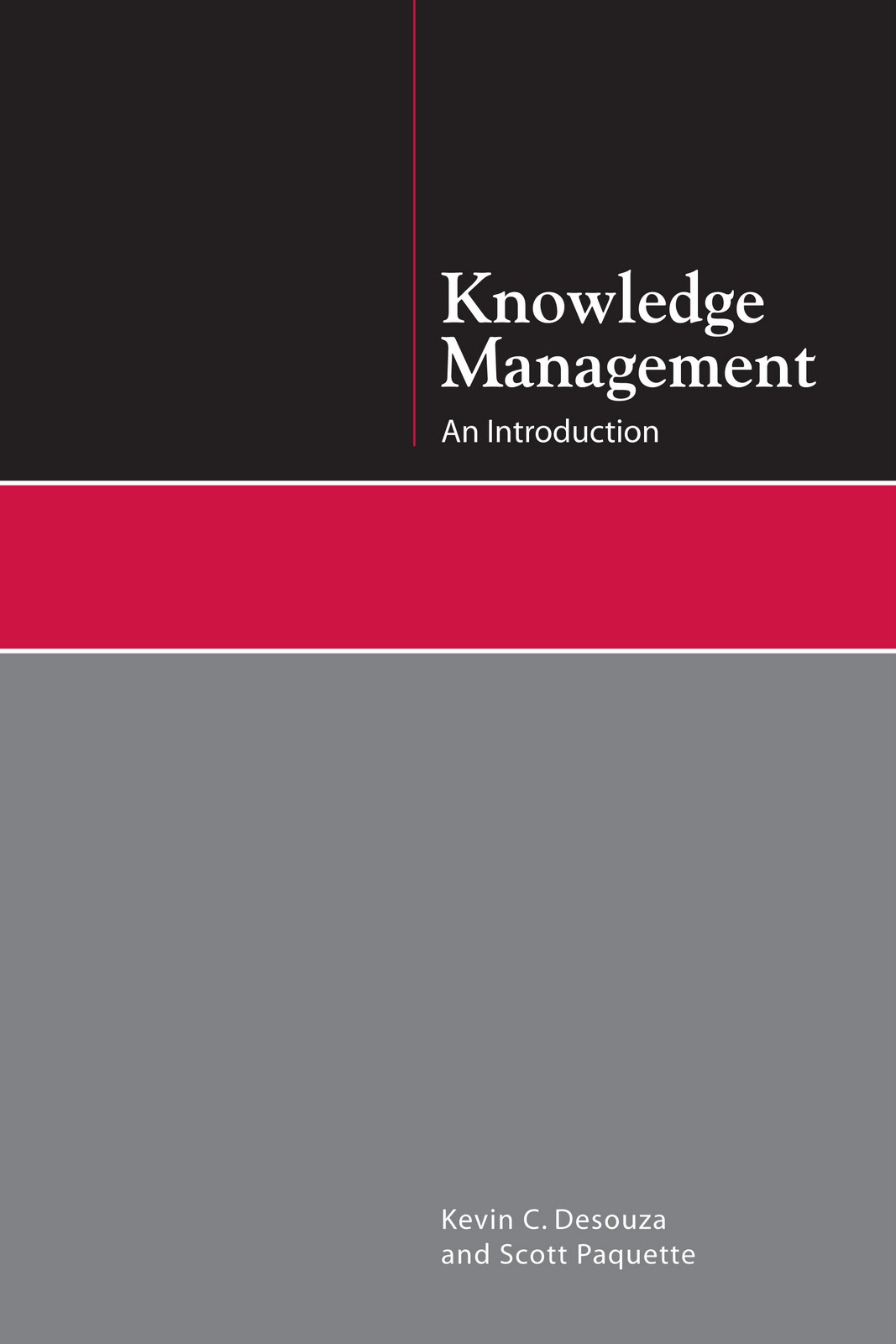
And another book project from the iSchool comes by way of Scott Paquette, who focuses on Knowledge Management (KM).  Scott co-wrote with K. Desouza, a colleague from U of Washington, the book Knowledge Management: An Introduction published by Neal-Schuman Publishers. This book balances the theory and practice of KM by examining fundamental and emerging concepts. They consider the issues that organizations encounter in the global marketplace, and it is one of the first books to integrate social media and networking into KM practice.

Knowledge Management: An Introduction published by Neal-Schuman Publishers

In addition, iSchool faculty member Mega Subramaniam, (along with Ann Ryu Edwards from the College of Education) received a university ADVANCE seed grant for a one-year research project: Leveraging Technology for Mathematics: Exploring Instructional Collaboration between School Librarians and Mathematics Teacher. This ADVANCE grant will serve as a pilot study for the development and deployment of a collaboration model between math teachers and school librarians that helps underrepresented, disadvantaged and underserved youths in middle schools increase engagement and achievement in math.

Mega has also been busy working on a recently awarded seed grant with Paul Jaeger: The Museum Experience of Children with Autism and Their Families: Improving Access through Web and Electronic Resources. Jointly funded by the Smithsonian Institution and the University of Maryland, Pino Monaco from the Smithsonian Center for Education and Museum Studies and Beth Ziebarth from the Smithsonian Institution Accessibility Program (SIAP) will be working with Mega and Paul on this research.  What is so exciting about this project is that it is one of the first concrete efforts to explore the integration of the web and other electronic resources as a means to promote greater inclusion of persons with disabilities in museums.

And still one more… the iSchool’s Trudi Bellardo Hahn has co-authored a very interesting summer article for the Bulletin of the American Society for Information Science & Technology. It asks the question: Has the revolution in scholarly communication lived up to its promise? In it the authors discuss Open Access channels of publishing and how they can support authors in transforming the traditional system of scholarly communication. 

So when I think about traveling that research blue sky, I am certain the paths we’re taking at Maryland’s iSchool can eventually lead to a whole sky of possibilities.

Tuesday, May 31, 2011

Research Tweets

Allison Druin, Associate Dean for Research, iSchool

Yes, on May 25, 2011, #HCIL was “trending” in the Washington DC area on Twitter (see screen grab by Jen Golbeck below).  What does this mean?  Amazingly for the first time in the Human-Computer Interaction Lab’s (HCIL) 28 years, so many of us were tweeting about the Lab’s Symposium on Twitter, we were among the top ten items people were talking about online in the Washington-area. Why care? Because more people than ever can now be a part of a research event through social media.
#HCIL Trending on Twitter in the Washington DC area, May 25, 2011

The Human-Computer Interaction Lab (HCIL)  is the oldest HCI lab in the country, possibly the world.  The lab is incredibly interdisciplinary with faculty, staff, and students coming from 9 colleges and 2 institutes at the University of Maryland.  The lab is jointly administered by the iSchool, Computer Science Department, and the Institute for Advanced Computer Studies.  Until a few days ago, I had the honor of being the lab’s Director for 5 years (I’m happy to say iSchool Faculty member, Jen Golbeck has taken over as the HCIL’s 4th director).

Each year at the end of the spring, the lab shares its work through an annual Symposium .  This year we presented talks, demos, workshops, and tutorials on social network technologies, electronic health record informatics, interaction design and children, information visualization, consumer health informatics, and more.  People presented the technologies they built, or discussed the empirical work they’d done and the lessons they’d learned, or talked about the design methods they used to make the new technologies. (See picture of demo session) This year at the Symposium we had over 300 HCI-interested professionals flying in from the UK, China, Indiana, or taking the metro from Washington DC and more. While this was one of the largest Symposiums we’ve ever hosted at the University, we also had the largest virtual presence of participants with many who followed the Symposium’s happenings and discussions through tweets.
Demonstrations during the HCIL Annual Symposium

One our favorite tweets of the two days was from someone outside of the lab, Brian Danielak (otherwise known as @Capbri) a second-year Ph.D. student in Science Education in the College of Education at the University of Maryland.  He said in his 140 characters: "The #hcil has an astoundingly positive research culture. Why can't more academic research groups be like this?"  This tweet prompted Erika Shehan Poole (@verbicidal) an assistant professor in the College of Information Sciences and Technology at Penn State University to ask, “What are some of the #hcil best practices for fostering positivity in research culture? help other groups learn!” What was so wonderful about this exchange is that Erica is someone entirely outside of our University and did not even attend the symposium, but was able to be a part of the discussion!

Well, Ben Bederson (@bederson), one of the former Directors of the HCIL did respond with 6 more tweets offering his suggestions for best practices:

“Best practices for #HCIL: Start by reading @benbendc '93 article - http://bit.ly/lFzV0e

“Second: *always* treat colleagues with respect. Their successes are your successes. #HCIL”

“Third: critique with grace. Be honest, but no one should *ever* leave a meeting crying. #HCIL

“Fourth: Focus your work on what you love. Life is too short to do what you *should* do. #HCIL

“Fifth: Only hire people you want to have lunch with every day. #HCIL”

“Sixth: Marry your colleagues :) Our Fourth CHIple is joining #HCIL next year.”

The only tweet that was questioned was the number of married couples in the lab ;) It turns out we will have 5 married couples as of January (Ben Bederson and I are one of those couples).  If you want to see the some of the other backchannel tweeting, you can do so by searching for “#HCIL” on Twitter.  There you’ll find everything from pointers to articles that reporters wrote about our talks: “@lintool: This Is What a Sabbatical at Twitter Looks Like - @chronicle article: http://bit.ly/ivgCNJ #HCIL” to short descriptions of what was happening: “@cydparr: Morning of demos at #hcil open house. Quick GUI help scripting using screenshots, spatial ability & mobile apps, citation snippets & more” to kind words from our participants: “@ieleta: I wished for a longer EventGraph presentation by @shakmatt, so interesting! #hcil symposium” (see an EventGraph image that Derek Hansen presented below)


A Twitter EventGraph created in NodeXL that shows part of the Twitter conversation about the HCIL symposium. See http://casci.umd.edu/HCIL2011 for details


All in all, it was a wonderful way to continue the research excitement, the exchange of ideas, and enjoy the 28th Annual HCIL Symposium. See you next year (at UMD or tweeting)!

Monday, May 16, 2011

Growing Research Energy

Allison Druin, Associate Dean for Research, iSchool

The other day, I received this one line email: “I’ve had two of the best Ph.D. days ever!” It was from iSchool doctoral student, Greg Walsh.  He had just finished two days of being in the CHI2011 Doctoral Consortium.  I knew when I suggested to Greg he apply months ago, he would love meeting students and faculty from around the world thinking about Human-Computer Interaction (HCI) issues.  But what I didn’t expect was how much Greg would take away from his two days of mentorship at this Doctoral Consortium.
 
During this consortium, each doctoral student got a chance to present their in-progress dissertation research and then received feedback from a small group of culturally diverse, multi-disciplinary HCI graduate students and faculty.  They suggested which research methods and design might be of use, how to best focus and present the work, and strategies to move the research forward. As Greg explained to me a few days ago, “It was awesome being able to see how far I’d come and how my work related to other doctoral students’ research.  Maryland really prepared me in ways I wouldn’t have guessed with my research.”  When we talked further, Greg explained, “Not a lot of people are thinking about design methods for creating new technologies.  People may mention it as a part of their research in developing new technologies, but not as much about how to change design methods.  I was psyched to see how different but useful my research is.”

Greg also explained to me that lately he’d not been feeling very excited about his research, but the doctoral consortium energized him in so many ways.  The suggestions he received and the good interest in his work were extremely motivating.  He also pointed out that meeting these graduate students and faculty made him feel much more connected to CHI conference community.  It’s not every day that a graduate student can walk into an international conference of 2700 people and feel comfortable and welcomed.


The CHI2011 Conference (photo by: articpenguin)

The doctoral consortium is one of several CHI venues in which students can connect with colleagues. The CHI Student Design and Student Research Competitions afford undergraduate and graduate students the opportunity to present their work to senior researchers as well as their peers. Beth Bonsignore, one of our iSchool doctoral students earned a spot in the Student Research Competition. Reflecting on her experience she shared: “All of the students in our competition received the undivided attention of experienced researchers for almost 3 hours. I learned a great deal about how to frame a compelling story about my work and had some great discussions about how I might extend it. I also had a chance to hear about the work of other students from all over the world, and share my thoughts about the worldwide use of mobile storytelling application designed for children. Where else can you get such an opportunity to connect with future collaborators?”


Beth Bonsignore & Jes Koepfler at the CHI2011 Conference (photo by: articpenguin)

This excitement and connectedness could also be found with our doctoral students who were “student volunteers” or as they’re affectionately called, “SVs.”  This year three of our doctoral students were a part of this CHI conference program: Beth Bonsignore, Jes Koepfler, and Jason Yip.   In exchange for 20 hours of volunteer time they were given free conference registration, all meals, and reduced hotel costs.  While the conference could not exist without the 150 students that do this each year, the students get so much more out of the deal.  They get a chance to network with HCI students from around the world, meet and help HCI researchers from companies, universities, and non-profit organizations they might never otherwise get a chance to.  

For example, during one SV lunch, when Beth Bonsignore and Jes Koepfler learned about the “cooking competencies” research being done by a fellow SV at Michigan, they connected him with Jason Yip, who has been designing a “kitchen chemistry” curriculum. Jason discussed the potential for future collaboration with his new-found colleague and me. Through the SV network, a new research area in chemistry education, human-computer interaction, and social media was born. Jason was so excited, he shared, “This has been an amazing experience because of how I get a chance to interact, not only with educators in my field, but with programmers, technology designers, and other people that have a vested interest in education.” At least 5 fellow SVs told Jason, Jes, and Beth how they published papers with student colleagues they met at past conferences. 

Jes Koepfler also an iSchool SV at CHI met people who broadened her thinking in exciting ways.  Jes’s doctoral research is at the intersection of marginalized populations and social media. As a result of attending CHI she was able to attend the session on "Homeless Users" and introduce herself and her work to some of the leading thinkers in the HCI community on this topic (Jill Palzkill Woelfer of the University of Washington, and Chris Le Dantec of Georgia Tech). 

The yearly CHI conference is not the only professional conference that can offer these important experiences for our students.  But all too often when we think about what graduate students should be doing, conferences seem to fall to the bottom of the list.  The CHI conference reminded us this past week that conferences should be on the top of our list when it comes to growing our research energy.

Monday, May 2, 2011

The Seeds of Research

Allison Druin, Associate Dean for Research, iSchool

I had an hour the other day with a doctoral student in our program who reminded me why I love research.  Clay (Eliezer) Templeton told me this incredible story of how he built an Adroid App for his synagogue’s Rabbi and a few weeks later he found himself being interviewed by CNN. It was an app to help people prepare for Passover, which had little to do with his doctoral research.  And he happened to mention that while he had some programming experience, he hadn’t programmed an app until he just decided one day to help out.  The funny thing is now that Clay’s gotten a taste of mobile application programming, he’s found out he really likes it!  So I asked him, how he thought he could use this new-found-fun to add to his research?  And then we started brainstorming about perhaps building an app that collects data or one that gets users more involved in the topic he cared about.  After an hour, it was clear that the seeds of research were sown.
 
This well-spent hour reminded me that you just never know where you will find inspiration for your research.  When starting a Ph.D. program, the one thing we do know is that doctoral students can never be sure what will inspire, excite, or interest them.  When those seeds start to sprout it’s in the most amazing times and places!

Sometimes the seeds of research are sown for faculty when we get the chance to work with talented people outside of the university.  This happened to two of our Assistant Professors, Paul Jaeger, and Mega Subramaniam and iSchool doctoral student, Lesley Langa.  They came upon the chance to work with Pino Monaco from the Smithsonian Center for Education and Museum Studies and Beth Ziebarth from the Smithsonian Institution Accessibility Program (SIAP).  Together they were just informed a few weeks ago that they received a “Seed Grant” to begin to explore some very exciting research.  Below they explain these research seeds:

Mega M Subramaniam, Paul T. Jaeger, and Lesley Langa:

We just found out that we have received a prestigious seed grant jointly funded by the Smithsonian Institution and the University of Maryland to support our project “The Museum Experience of Children with Autism and Their Families: Improving Access through Web and Electronic Resources.”  This project is one of the first concrete efforts to explore the integration of the web and other electronic resources as a means to promote greater inclusion of persons with disabilities in museums. This project will identify the ways in which the use of the web and other electronic resources by students with autism from Ivymount School in Rockville, MD and their families can help to make museums more inclusive and enhance the museum experience for persons with disabilities. In examining the museum experiences of the children with autism and their families, the study will focus on the roles of the various web and electronic resources and physical resources in the experience of the museum visit and the effect of the accessibility resources on the attitudes of the children and their families toward museum visits.  

This project builds on a wide range of ongoing research at the Information Policy and Access Center (iPAC)  in the iSchool. A core part of the work at iPAC is finding ways to increase inclusion of disadvantaged, underserved, and underrepresented populations in information and information technology. This project will build on our previous research on access for persons with disabilities, much of which is detailed in the book Disability and the Internet: Confronting a Digital Divide by Paul T. Jaeger that will be published in October by Lynne Reiner Publishers.   

We are very excited about this study, as the findings will contribute to: increasing accessibility of museums to people with disabilities; illuminating the importance of the web and electronic resources in expanding a museum’s audience; and expanding research into the role of family learning with special needs children in museums.